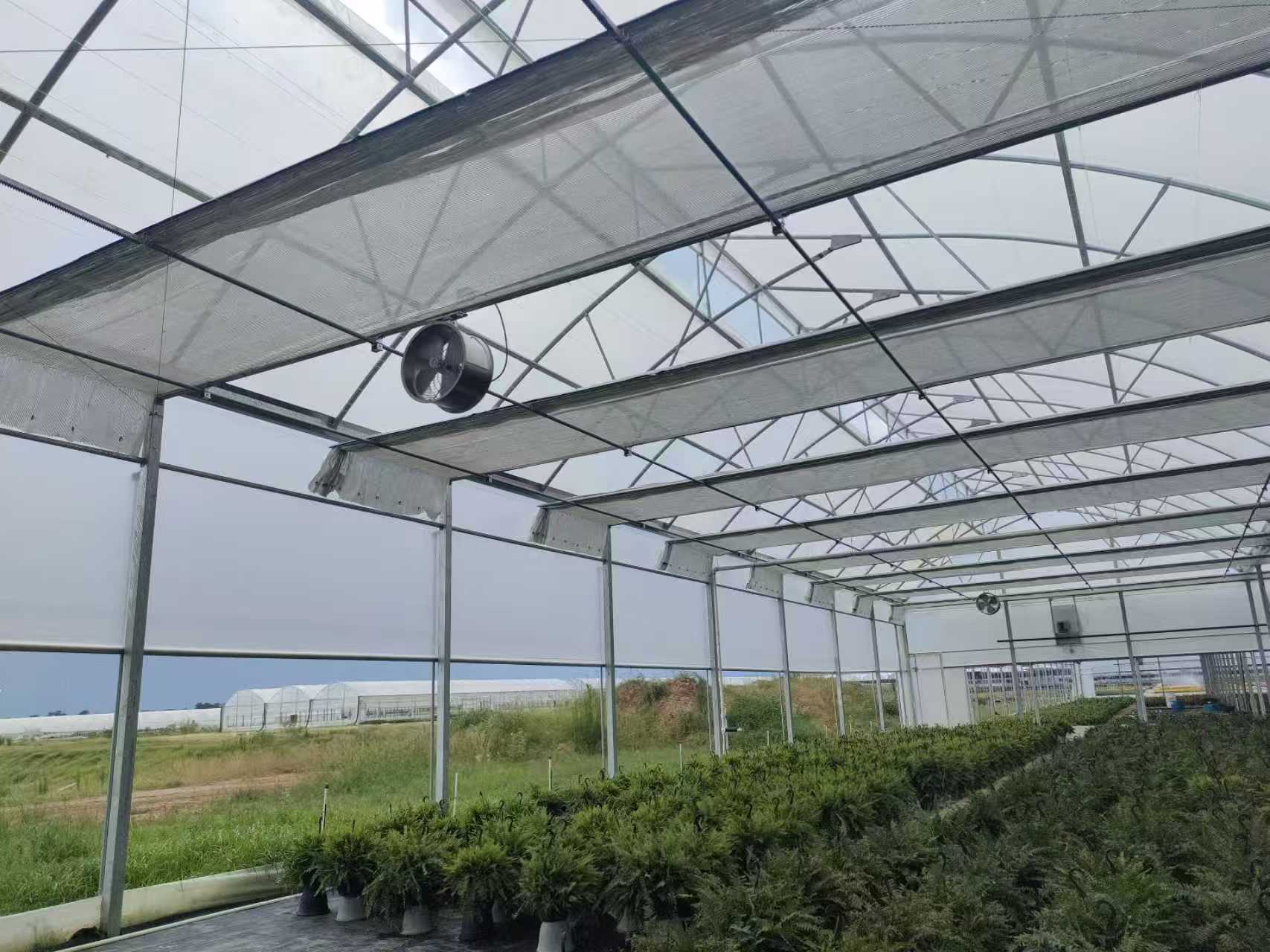
In modern greenhouse production, energy
cost volatility and climate control efficiency are two of the biggest
operational challenges. One of the most effective and proven solutions is the
installation of a retractable curtain system (energy screen system),
designed to optimize both heating and cooling performance throughout the year.
Whether used in new construction or
retrofit projects, this system has become a core component of high-performance
greenhouse climate strategies.
What Is a Retractable Curtain System?
A retractable curtain system—also known as
a greenhouse energy screen, thermal screen, or shade curtain system—is an
internal climate control layer installed inside the greenhouse structure.
It operates dynamically based on
environmental conditions:
During high temperature periods:
The system reduces solar radiation entering the greenhouse, lowering heat
stress on crops and improving indoor climate stability.
During cold periods:
The screen acts as a thermal barrier, reducing heat loss and maintaining a more
stable internal temperature during nighttime or low-light conditions.
This dual-function design makes it one of
the most efficient climate control tools in controlled environment agriculture
(CEA).
Key Energy Saving Benefits
Heating Season Performance
A well-designed energy screen system can
deliver significant reductions in heating demand:
20–40% reduction in nighttime heat loss
15–30% reduction in annual heating energy
consumption
10–25% reduction in fuel usage (gas or oil
equivalent)
Up to 30% reduction in peak heating load
These improvements directly translate into
lower operational costs and more stable crop environments.
Cooling Season Performance
In warm and high-sunlight environments,
curtain systems also improve cooling efficiency:
15–35% reduction in electricity consumption
(ventilation, fan & pad systems)
20–40% reduction in peak cooling load
10–25% shorter fan operating time
2–5°C reduction in peak greenhouse
temperature
This helps reduce system strain while
improving crop quality and consistency.
How to Select the Right Greenhouse Curtain
System
Choosing the correct configuration depends
on production goals, crop type, and climate strategy:
1. Shade Level
Low shading: high-light crops (e.g.,
tomatoes, peppers)
Medium to high shading: leafy greens,
ornamentals, propagation environments
2. Energy vs. Shade Function
Energy screen (thermal insulation focus): optimized
for heat retention and energy savings
Shade screen (solar control focus): optimized
for cooling and light diffusion
3. Light Diffusion Properties
Diffused screens: improve light
distribution, reduce hotspots, enhance crop uniformity
Non-diffused screens: stronger
directional shading, simpler light control
Return on Investment (ROI)
In commercial greenhouse projects,
retractable curtain systems typically deliver:
Payback period: 2–4 years under
normal operating conditions
Faster ROI in regions with high energy
costs or extreme climates
Long-term reduction in both heating and
cooling expenditures
As energy prices continue to fluctuate
globally, the financial attractiveness of climate control upgrades is
increasing.
Retrofit Compatibility
One of the strongest advantages of modern
curtain systems is their adaptability.
In most cases, they can be installed in
existing greenhouse structures without major structural modification. The
system is modular and can be customized to fit different spans, heights, and
production layouts.
This makes it a practical upgrade option
for improving older greenhouse facilities.
Climate Strategy: Why It Matters
Effective greenhouse design is not
one-size-fits-all. Curtain systems can be tailored to different climate
priorities:
Hot climate strategy: prioritize
shading efficiency, cooling load reduction, and heat stress control
Cold climate strategy: prioritize
thermal insulation, heat retention, and energy efficiency
A well-balanced system improves both crop
performance and operational predictability.
Conclusion
Retractable curtain systems are more than
just shading equipment—they are a core greenhouse energy optimization
technology.
By reducing heating demand, lowering
cooling costs, and stabilizing internal climate conditions, they provide one of
the highest-impact upgrades available in modern greenhouse design.
For commercial growers and greenhouse
operators, this is not only a technical improvement, but also a direct pathway
to long-term cost reduction and production stability.
This solution is part of the greenhouse
climate engineering expertise provided by Sunrise Greentech, specializing
in greenhouse structure systems, climate control integration, and
energy-efficient design for commercial horticulture projects.